Testing & quality
Sugar Defender Quality Testing: What the Badges Show and What Is Missing
Sugar Defender quality testing is not publicly documented. The brand shows four badges, including GMP and an FDA-registered facility, but the label names no factory, certifier or audit date, and no lab report has been published. Lot SD-26/IS-7185 is a seller reference, not proof. A real certificate of analysis would close the gap.
Written by the Sugar Defender label deskUpdated
The short version01
What does Sugar Defender quality testing show so far?
So far, Sugar Defender quality testing shows nothing a buyer can check. There are brand badges and a seller's lot reference, but no published lab result.
That does not mean the drops are poor quality. It means the proof sits with the seller, not with you.
Three things would change the picture: the name of the factory, a certificate from an outside auditor, and a lab report tied to a lot number printed on your bottle. None of the three is public as of October 18, 2026.
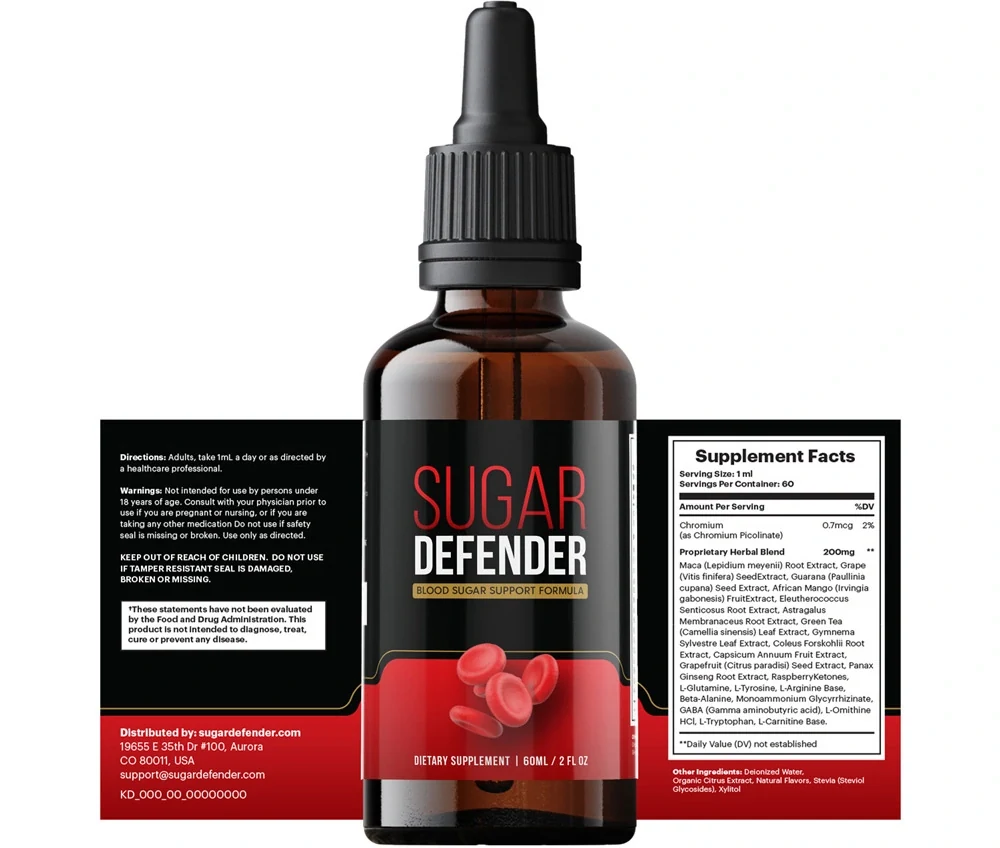
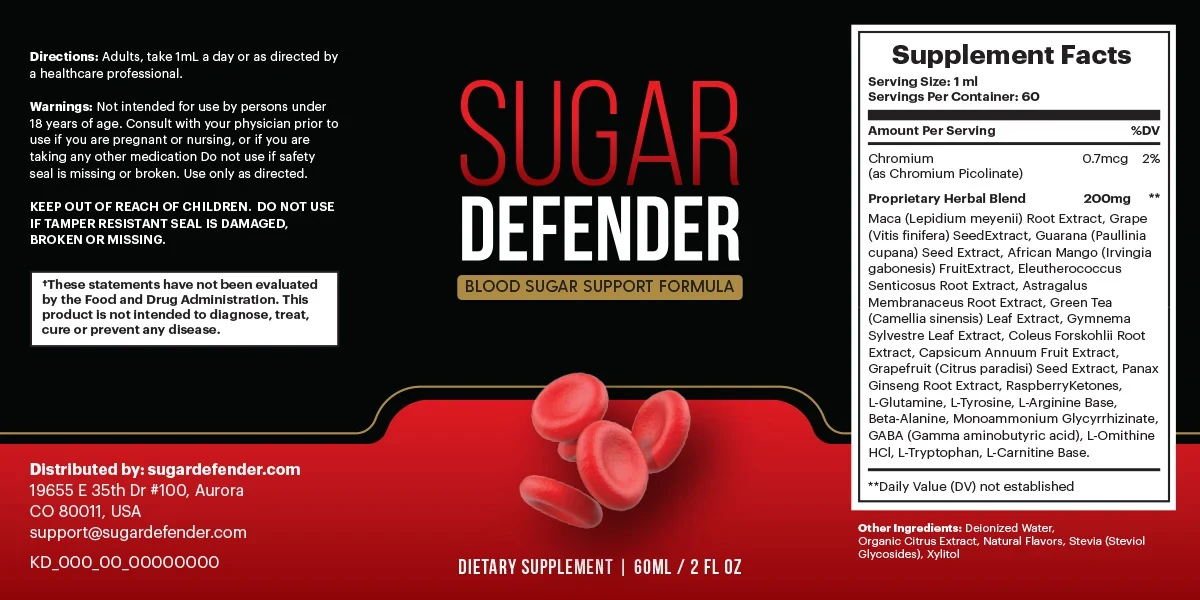
The label lists every ingredient, a 1 mL serving, tamper-seal warnings and a distributor in Aurora, Colorado. That is the full set of quality facts on the bottle.
Badges02
What do the four Sugar Defender badges mean?
The four badges are marketing images from the brand. They describe what the seller says about the product; none is a certificate you can look up.
The money-back seal is the only one with terms you can test, because the 60-day guarantee is written out on the sales page.

A brand badge. The label names no factory, no certifier and no audit date.

A badge from the brand. The label names no facility, and registration is not approval.

A brand badge. No outside certification is printed on the label.
Matches the 60-day money-back guarantee on the sales page.
Every badge is taken from the brand's own image set. A badge is the seller's claim, not a certificate, and none names a certifier, lab or audit. FDA does not approve supplements before sale (FDA, Using Dietary Supplements), and health claims in ads need real evidence (FTC, Health Products Compliance Guidance).
GMP03
Is Sugar Defender GMP certified?
The brand shows a GMP badge, but no certifier, factory or audit date is named, so Sugar Defender GMP status cannot be checked from the outside.
GMP stands for good manufacturing practice. In the United States, every supplement maker must follow FDA's current good manufacturing practice rule for supplements, 21 CFR Part 111. It covers identity testing of ingredients, clean equipment, batch records and complaint files.
A GMP "certificate" is something else. It comes from a private auditor who visits the plant and issues a dated document with a registration number. A badge with a gear or a check mark is not that document.
| Item | Who issues it | What it proves | Shown for Sugar Defender? |
|---|---|---|---|
| Brand badge | The seller | Only that the seller makes the claim | Yes, four badges |
| FDA facility registration | The facility files it | That FDA knows the site exists; not approval | No facility named |
| GMP audit certificate | A named outside auditor | The plant passed a dated inspection | Not published |
| Certificate of analysis | A lab, for one lot | What that batch contained when tested | Not published |
FDA does not approve supplements before sale (FDA, Using Dietary Supplements), so "FDA registered" never means the drops were reviewed for safety or results.
Origin04
Is Sugar Defender made in the USA?
The label does not say. It names a U.S. distributor, sugardefender.com in Aurora, Colorado, but prints no country of manufacture.
A distributor sells the product under its name. The plant that mixes and bottles the drops can be somewhere else, and on this bottle it is not named.
So when people search "Sugar Defender made in USA", the honest answer is "distributed in the USA, origin not printed". We do not repeat any made-in claim the label does not make.
Sugar Defender manufacturing details, such as the plant, its audits and its testing lab, would need to come from the distributor. The address on the label is sugardefender.com, 19655 E 35th Dr #100, Aurora, CO 80011, USA, [email protected].
Outside testing05
Is Sugar Defender third-party tested?
We found no evidence that it is. No outside lab, testing program or seal of a known tester appears on the label or the sales page.
A third-party tested blood sugar supplement usually shows one of two things. Either it carries the mark of an independent program, such as USP Verified or NSF Certified, that you can look up by product name. Or the seller posts a lab report for each lot.
- A named lab or program, not a generic "lab tested" ribbon
- A lot number on the report that matches the bottle
- Results for identity, strength and contaminants such as lead and microbes
- A test date and a signature
Sugar Defender shows none of these today. If the brand publishes a report, we will add it and date the change.
Sugar Defender: from $49 a bottle60 mL · 2, 3 or 6 bottles · free US shipping on 3 or 6 · 60-day money-back guarantee
See packsWhy it matters06
Why should you ask for a lab report at all?
Because labels and contents do not always match. Studies of the wider supplement market have found products that held something other than what the label said.
Grapefruit seed extract is a clear case, and it appears on this label as line 11 of the blend. Swedish regulators tested three grapefruit seed extract products after a patient on warfarin had a dangerous blood-test result. All three contained a synthetic preservative, benzethonium chloride, and no real grapefruit seed extract was found (Brandin et al., Eur J Clin Pharmacol 2007).
University of Mississippi researchers reported the same pattern. Commercial products sold as grapefruit seed extract held benzethonium chloride at 0.29% to 21.84%, and two held triclosan (Avula et al., Pharmazie 2007).
Hidden drugs are a second risk. From 2007 to 2016, FDA flagged 776 supplements that contained unapproved drug ingredients, mostly in products for sexual enhancement, weight loss and muscle building (Tucker et al., JAMA Netw Open 2018).
None of these studies tested Sugar Defender. They show why a lot-specific lab report is worth asking for with any blend, this one included.
Certificates07
What should a real certificate of analysis include?
A real certificate of analysis names the lab, the product, the lot, the tests run, the limits and the results, with a date and a signature.
The seller gives a lot reference, SD-26/IS-7185, and a CoA reference, SD-7185-26-IS. Those are only codes. No document with lab results has been shown to us, so neither code proves anything about a bottle.
| Field | Why it matters | On file today |
|---|---|---|
| Lab name and address | Lets you check the lab exists | Not published |
| Lot number | Ties the result to your bottle | Seller reference only |
| Identity tests | Confirms ingredients are what they claim | Not published |
| Chromium content | The only printed amount: 0.7 mcg per mL | Not published |
| Heavy metals | Lead, arsenic, cadmium, mercury | Not published |
| Microbes | Matters for a water-based liquid | Not published |
| Date and signature | Shows who stands behind it | Not published |
Your checks08
How can you check Sugar Defender quality yourself?
You can check four things at home: where you bought it, the seal, the label and the lot line. Ask the seller for the rest.
Buy from the official order page
Our buttons go there. Third-party listings may come from other brands.
Check the tamper seal
The label says not to use the bottle if the seal is damaged, broken or missing.
Compare every label line
Match your bottle against the 23 lines on our Supplement Facts transcript.
Ask for the CoA by lot
Email the order desk at [email protected] with your lot number and ask for a signed lab report.
The full bottle checklist, including look-alike brands, is on real or fake checks. If you ever feel unwell after a supplement, stop it and tell your doctor; you can also report it to FDA (FDA, How to Report a Problem with Dietary Supplements).
FAQ09
Quality and manufacturing questions
Is Sugar Defender made in a GMP facility?
The brand says so with a GMP badge, but it names no factory, auditor or audit date, so we cannot confirm it. All U.S. supplement makers must follow FDA's good manufacturing rule for supplements. A private GMP certificate is a separate, dated audit, and none has been published for these drops.
Where is Sugar Defender manufactured?
The label does not say. It names a distributor, sugardefender.com at an Aurora, Colorado address, but prints no factory and no country of manufacture. A distributor sells the product under its name; the plant that makes it can be elsewhere. Ask the distributor if origin matters to you.
Is Sugar Defender tested by an independent lab?
We found no sign of it. No testing program seal, lab name or lot-specific report appears on the label or the sales page. The seller's codes SD-26/IS-7185 and SD-7185-26-IS are references only. If a signed report is published, we will add it and date the update.
What does the FDA registered facility badge mean?
It means the seller says the drops come from a facility registered with FDA. Registration only tells FDA a site exists; it is not an inspection result or an approval. The label names no facility, so the claim cannot be checked against FDA's records by a buyer.
Is Sugar Defender non-GMO?
The brand shows a GMO-free badge, but no outside certification, such as a named non-GMO program, is printed on the label. Treat it as a seller claim. If GMO status matters to you, ask the order desk which program verified it and request the certificate number.
Why does a lab report matter for a liquid supplement?
A water-based liquid can grow microbes if it is made or stored badly, and blends with 22 ingredients are hard to check by eye. A lot-specific report shows identity, strength, metals and microbe counts. Without one, the label is the only quality evidence you have.
Who wrote this10
Written and reviewed by
Pages built from the label, the sales page and linked NIH, FDA, CDC, FTC and peer-reviewed sources.
Last updated . Read our editorial standards and how we check reviews. This website is run by Isugardefender, a Sugar Defender U.S. shop, not by the manufacturer or the distributor. We earn money when you buy through our order links.
Keep reading
More about Sugar Defender

Sugar Defender U.S. shop
Ready to try Sugar Defender?
Check your medicines first, then pick a pack. Three or six bottles ship free in the US and cost less per bottle, and every pack carries the 60-day money-back guarantee.
- Secure checkout on the order page
- 60-day money-back guarantee
- Ships from the U.S.; free on 3 or 6